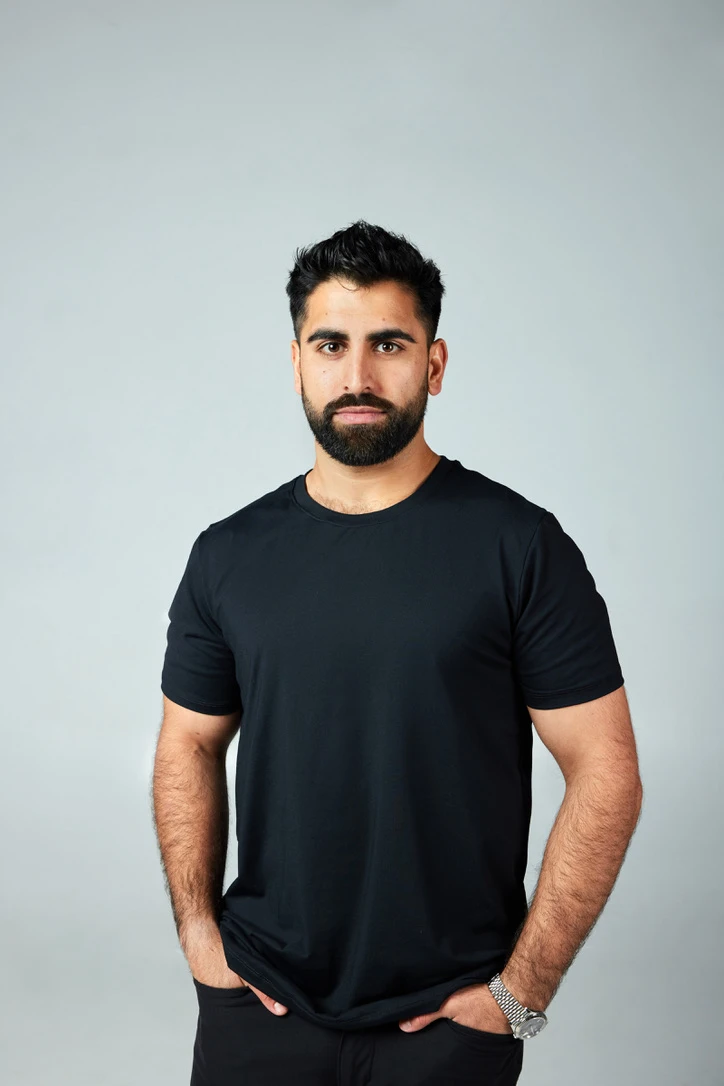
Happy Sunday!
If you're reading this, I hope you're sitting on a couch, feet up, neck fully supported, Jambys on, and with a nice hot beverage of choice to balance the fall weather.
This may have been one of the craziest weeks. People got their Lucky Sharms cereal box and t-shirt, Me and Moiz recorded a Limited Supply episode with Keith Rabois, I spoke at a panel about creator-led brands, Juvee (a creator brand we worked on) finally launched, we onboarded our last cohort of select clients at 1180 Media, and we dropped our second episode with Harley Finklestein (Shopify’s President) for Limited Supply → Apple, Spotify, YouTube.
But, that won't stop another Sunday newsletter from coming to fruition! Today I wanted to write about a spirits company we worked with. This is a common playbook for spirits brands given their selling restrictions, but I think it'll bring value to understanding product-level messaging testing.
A couple of years ago, we worked with a spirits brand (they've now sold to a larger strategic holding company) that wanted to figure out what to do with their digital arm of the business. They had great social media engagement (lots of people loved posting/tagging their brand) and their Instagram was, for the most part, more useful and functional than their website, at the time.
At first, I thought, "We should re-do this entire website" since the site was built on a very basic CMS platform. That way we can at least get everything set up, and then get the DTC business flushed out and scaling. But then, the reality of a spirits business kicks in, so here's what we did instead.
We set up a relationship with ReserveBar (think Amazon for Booze), which has its backend powered by Shopify Plus. That was a huge plus because we could create another instance of Shopify, specific to our client, which would then feed its orders directly into ReserveBar.
With spirits, if you're unfamiliar with the BS three-tier system set up by the mafia, alcohol companies that are not wine can only sell to a distributor, which then sells to a retailer, which then sells to a customer. Personally, I'm hoping that as cannabis becomes more mainstream, these laws are also re-written for alcohol. I worked on a cannabis brand earlier this year, and that was 10x more of a headache.
So, we got the additional Shopify Plus instance setup. Now, the margins are not huge here, because the brand only makes money selling to the distributor... they don't get the money you pay, as a consumer. Additionally, this brand had phenomenal retail distribution (Costco, Walmart, Target, etc). So with that in mind, we put together a plan to figure out how we can drive higher sell-through in those key retailers.
With the back-end on Shopify, we decided to not invest in a full Shopify front-end site, but instead build a micro-site, an extended LP, if you will, for the brand. This meant we could have a site from idea/concept to transacting within 2 weeks for a fraction of the cost of a full site. And, if we really decide in the end that we should have a full Shopify site, we can then invest in that.
Alright, so now we've got a Shopify backend that can transact orders, we've got a front-end site experience (this is what HOOX does), and now we need to drive sell-through in retail.
Here's how we did it:
Step 1: Set up an eCommerce experience (microsite, landing page, website) with all the right pixels, tagging, messaging, upsells, etc. Similar to any web experience you'd want to give your customers.
Step 2: Understand the key markets you need to win in, and build audiences for those key markets.
Step 3: Run small to medium-sized ad tests to the key markets and begin testing: different product-level messaging, brand-level messaging, flavors per geo, recipes to showcase consumption, etc.
This level of testing helps us understand exactly how to message and market the product in Southern California, and how that differs from the way that it comes across in Austin, TX, for example.
We set these up as conversion campaigns in Meta, which led to the microsite, and we were able to understand how different creative/messaging produced different results for post engagement, CTR (click-through rate), CVR (conversion rate), and ROAS (return on ad spend).
By the end of this entire experiment, we knew which type of messaging worked best for local markets to use in their field marketing, their retail shelf strips (the real estate where brands can add more color to their product), their social media, their email blasts to local regions, and for their salespeople to speak to it when talking to retailers of why they should carry the product.
If I were to re-run this test today, I would add two tools to the steps above:
Northbeam for better ad creative/campaign attribution. The Northbeam platform gives you insights that make more sense of which exact ad and campaign drove a sale, even with iOS 14 blocking data from getting back to the Meta ad engine. Using Northbeam also gives you more room to prove the results and keep the CFO happy.
Adgile's Polygon product creates more targeted audiences to go after. We used a combination of lookalikes (based on our existing email list) and interest-based targeting to build our retail audiences. If I could do this again today, I'd go to Adgile and tell them to load in an audience of all the Target shoppers who shop 2x/month or more and then run these campaigns. Adgile collects mobile device IDs, based on who was in the geo and then can load those into your ad accounts. (I’m trying to get them to get a HOOX page because their site doesn’t explain any of this properly!)
If this strategy is interesting to help you drive better messaging for channels outside eCommerce, I highly recommend trying it out. If nothing else, using DTC as a feedback loop will help you learn a lot faster than waiting to just see the results.
I predict that every major consumer brand that relies almost fully on retail will start running more tests like this to understand how they should be talking about their products in a way that feels more personalized to the consumers. It's one of the most requested asks from large conglomerates or holding companies that approach Sharma Brands.
Today's story/punchline was short and sweet... did you like that better than the long rant emails? Let me know!
On to some fun stuff...
Vendor of the Week:
Tapcart — The company that is literally giving you a free mobile app for Black Friday
Oh, no there is not a typo in that headline. Tapcart got smart... they know you already have 8 things on your plate, and by the time you finish reading this email, there's probably going to be another fire that just popped up.
They got smart and said — "Screw it! We know that mobile app downloads have a 40% higher adoption rate during the holidays, so let's just give Nik's readers a free app."
It's actually a good deal. It takes 2 weeks to set up an app (I did this for Long Wknd and the Tapcart team did pretty much all the heavy lifting to get us live — they'll do it for you too), and they're giving you 3 months free.
If you don't remember Tapcart from my other emails, they'll turn your Shopify store into a fully-functional iPhone and Android app. You can edit everything inside your app without knowing a single line of code, it's all drag and drop. And, you can participate in the upside of a mobile app: push notifications, better analytics/data, higher conversion rates, higher AOVs, etc.
Landing Page of the Week:
Butcher Box is the go-to service for any home chef who wants high-quality meat, and most of their business is done directly to consumers.
When they came to HOOX (pronounced “hooks”), the HOOX team did a ton of research to nail the exact way the landing page should be messaged given the source of traffic, and HOOX built a beautiful page that feels on-brand, and informative.
Check out the ButcherBox Landing Page here
If you're finally ready to lower your customer acquisition costs by 20-30%, then buy a landing page from HOOX, and we'll concept, wireframe, copywrite, design, and develop a landing page for you.
That's all for this week
This past week... what a week. If you have tomorrow off, then make sure you chill for a little and prepare your mind for a 4-day sprint.
After doing Barry's with Keith, I have determined that Barry's has nothing on Rumble Training. I don't make the rules, but it is what it is.
If you want to win a $100 Amazon gift card from Workweek, you can take this quick survey to help contribute to their “State of Marketing Report” that comes out soon! This report will analyze the biggest challenges and priorities for the coming year, as well as predictions of some of the major marketing trends.
I hope you have an amazing upcoming week. Get those 9 hours of sleep tonight, get a sweat in tomorrow, smile at someone random while you walk around this week, and I'll see you next Sunday!