Happy Sunday!
If you’re reading this, I hope you’ve got your feet up, your elbow on an arm-rest, a weighted blanket draped over yourself, and a beverage in your hand. Today’s email will be a quick(er) read than normal, but we’re going to dive into my favorite nuggets from Ben, the President of True Classic, a brand that did $150M in revenue just 2 years after launching, all with a $3k investment.
If you haven’t already listened to the episode, you can listen on Apple, Spotify, or YouTube. It might be more fun to listen to it, and then read this email as the analysis/commentary after. And, as always, if you have a spare 30 seconds, please leave us a review on Apple or Spotify and subscribe! It helps me and Moiz out a lot.
As I mentioned last week, if you’re a brand doing $25M+ online, and want to scale, we are looking for 1 more brand to bring on at Sharma Brands, and a 2 more at 1180 (separate company, but for now, living on the SB site). If that’s you, fill out this form, and I’ll email you back!
Ok… I don’t have much else to say, let’s get into it.
To put it simply, I think that Moiz and I recorded one of our best episodes of Limited Supply this past week. The amount of DMs, tweets, text messages, and even in-person comments I’ve gotten from you all saying how much you loved the breakdown, the questions, and Ben’s answers absolutely made my week.
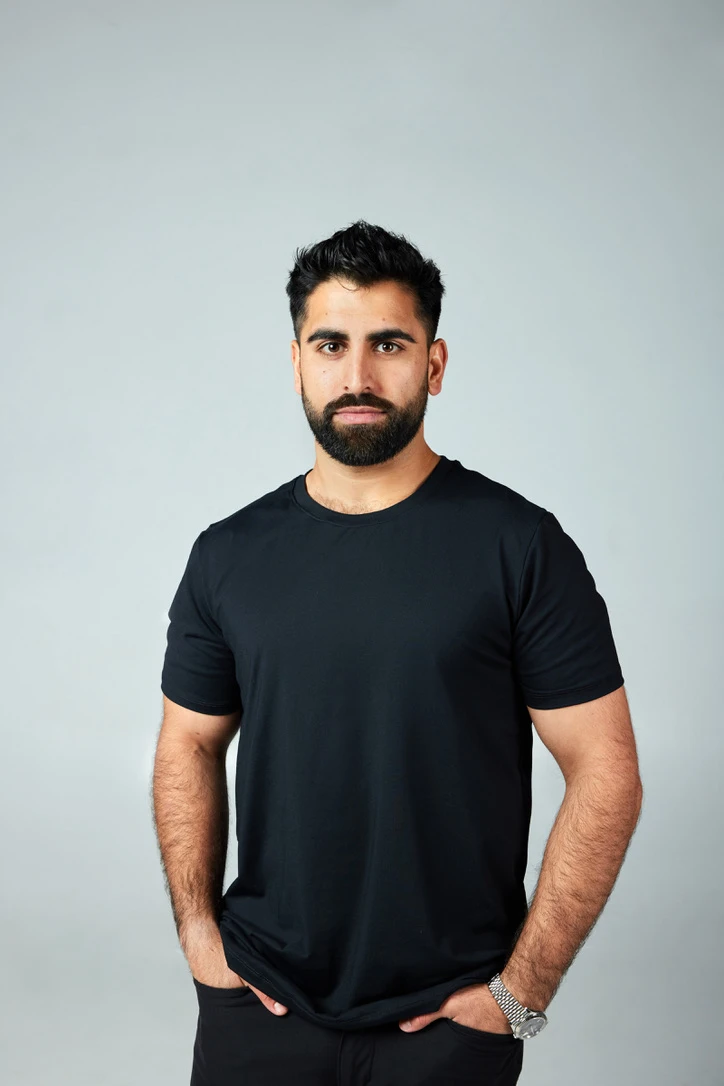
This past week, we talked with Ben Yahalom, the President of True Classic who put on a 70 minute masterclass on how to build a hyper-growth and profitable DTC brand. In case you didn’t know, True Classic (the men’s apparel brand that started with just tee-shirts) is one of the fastest growing DTC brands, ever. In just a few years (2019-now) they have gone from nothing, investing $3,000 amongst a couple guys, and now they’re at 150M in annual revenue.
Ben was my favorite type of podcast guest: an open book. He shared a bunch of True Classic’s numbers alongside how much they spend on marketing, what their margins are, how he thinks about contribution margin and RoAS vs PRoAS, his thoughts on using agencies to help TC scale, Meta as the economic engine that powers their brand, and so much more. We even talk about the secret FB Disruptors program that he used to be on the team for, and I used to be a part of — this was like the high-rollers of Facebook advertisers.
The episode was filled with tactical nuggets so I’d love for you to check it out.
Also, if you watch the video version on YouTube you will see Moiz and I smiling the entire time as we’re both thinking about how to apply this model to our own brands, or what brand we’re about to go start with all these nuggets.
Okay, here were some nuggets that I got from the conversation that I wanted to share with you as well.
Be Profitable From Day 1
According to Ben, outside of the initial R&D and PO, True Classic was profitable or nearly profitable on day 1.
They spent $3000, yes, just $3000 to do their initial R&D, put up a landing page, create an ad, run some traffic, and get their first sale.
A few months later, they were doing $50K/month profitably and knew that this was going to be big.
As the founder of only bootstrapped & profitable businesses myself (I’ve never raised money for myself), I am one of the biggest proponents for marketing efficiency and doing things that have a high ROI. You simply don’t need $1M dollars to test if your DTC brand is going to work. I have been saying this for years but I strongly believe that all you need to do is:
Find a product, build a landing page (we get tons of “test brand” clients at HOOX now, too), create a handful of ads (some UGC, some animation, some statics), run some traffic, and with ~$10-20K, you are going to know pretty quickly whether or not there is any demand. If it’s working, you scale up and adjust spend accordingly. If it’s not, then you’ve only sunk about $20k or MAX $30k trying to figure it out.
Generally when I invest in early stage companies, I look for this validation anyways. If you’re launching a CPG brand/product, I don’t really care about your TAM or how YOU think it’s going to disrupt something… tell me about your CPA, your click-through rates, what messaging resonates best, what audiences you can tap into, etc.
I know Moiz thinks the same way — 2 years ago I was trying to get him to invest in a brand I was/am very bullish on. He said he just wanted FB access, and once he had it, he wrote a check.
Analyze Everything
Ben and I were part of the Facebook Disruptors program where they had about 80-90 of the fastest growing companies on the platform get priority access to FB reps to test new features, troubleshoot problems, and collaborate with the FB team directly to unlock new growth for our brands. I loved being part of the program and meeting people like Ben.
Ben, having a previous life in the Air Force, is very analytical and all about the numbers. Pixels lie, attribution software (can) lie, you know what doesn’t? Good old pivot tables, LTV cohort analysis, and MER.
He was able to tell us where he needs to be on his RoAS vs PRoAS, what the contribution margin was for each channel, how much he was allocating to Meta on good and bad months, what the payback period was for net new customers, how much he would need to spend on paid search for it to be “worth it” for him and so much more. Ben is a numbers guy and I love that about him. He lets the data dictate his decisions and it’s exactly how they scaled so fast.
One problem I always had working on the brand side was when the CFO would say, “Hey, great job with 2 million site visitors this quarter, let’s make that 2.5M for the next quarter, and let’s cut Meta spend by 20%.” WTF. How? It made no sense. The beauty of the way Ben thinks, is he undersatnds the numbers AND how the platforms work — that’s a huge advantage we didn’t get to talk much about. A CFO/COO operator who understands the technicalities of ad platforms always has the upper hand.
Prioritize PRoAS not RoAS
In my opinion, RoAS is kind of a fake metric if you don’t account for the true COGS. This includes customer service and returns. Instead, I think that Ben, Moiz, and I agree that brands should focus on PRoAS or “Profitable Return on Ad Spend” which is really what matters in the end. It’s not about pure RoAS, it’s about your net contribution margin when every other cost is accounted for. You need to know what your all-in profitable return is for each channel that you run. Meta, Tik Tok, Paid Search, CTV, etc all have implied RoAS numbers. Now obviously you need to get really good at analytics and looking for deserved/underserved credit and attribution but if you follow the data, it’s definitely there.
You can use this data to make better decisions about your acquisition allocation per channel and how you view the efficiency of new ads and tests. Profit and net contribution margin is what matters. You should be calculating that into pretty much everything that you do.
Emails Are an Asset (That should be counted on your balance sheet)
One thing that I thought was really interesting and I definitely agree with is that Ben said that emails and SMS numbers should be viewed as an “asset” and should be counted as a line item on your balance sheet.
Sadly, due to GAAP accounting rules, you can’t actually count these as assets but I think it’s a really good mental model to have in mind.
Basically, Ben said that beyond that actual RoAS or PRoAS, every dollar spent on marketing typically helps you acquire some new assets that have an implied LTV. That could be new customers, new emails, new SMS numbers, more attributable repeat purchases, etc.
For example, after spending 100M+ on digital ads, True Classic now has 2.5M unique customer emails in their Klaviyo account. Ben didn’t give a monetary value to what he thinks each email is worth but he said without question that the repeat purchase rate and LTV of customers who gave both their email and SMS was significantly higher than those who didn’t.
As Moiz says, emails are basically free revenue. You can market to these people forever through ongoing campaigns, sequences, and flows.
They should definitely be considered an asset and should get treated like one if you are ever selling your brand. To put it another way, your true “Return on ad spend” isn’t just revenue, it can be the brand value and awareness, the emails and SMS numbers, repeat purchases that likely wouldn’t have happened otherwise, and more.
Meta Is Still The Economic Engine For Most Brands
Ben is slightly biased because he was part of the FB Disruptors program but much to Moiz’s delight, he revealed that Meta was still the economic engine for True Classic. He said that on average, 50% of their budget is still being spent on Meta. In their highest concentration months, that number could go up to 80%.
As I have also advised many brands, I think they should pretty much always start with Meta (FB and IG) when it comes to ads, test and learn, then expand. There is a reason why Meta has been and still is one of the biggest ad networks in the world. The answer is simple: Meta ads work!
Getting The Basics Right
Ben, like me, loves to preach the basics.
At the end of our discussion he basically said that there’s only a few things that you need to get right.
- You have to have a killer product. Product is the foundation of everything.
- You have to produce engaging creative.
- You have to nail acquisition and ads.
- You have to nail landing pages and your web experience
- You have to nail email and SMS
- You have to nail customer service.
And that’s about it for the foundation of a brand.
Obviously as you grow, you will have product expansion, channel expansion, upsells and cross-sells, more competition, retail, influencer marketing, etc but the tried and true tactics still remain.
Anyway, I hope that you get a ton of value from this episode and I’m really excited for the next one. If you want to hear the full 70 minute conversation, just click here to listen to the full episode.
Now, onto some fun stuff…
Vendor of the Week:
Tapcart — One of the secrets behind the retention strategy at True Classic, Tapcart’s infrastructure to setup and launch a mobile app.
One thing we didn’t get to cover much with Ben (at least during the recording) was the impact of Tapcart on the True Classic business. Generally, when looking into the anonymized Google Data Studio reports, it’s easy to see that, on average, Tapcart brings in about 5-10% of a brands revenue, which is pretty high.
If you listen to the episode with Ben, you’ll hear him talk about the importance of repeat purchase rate, getting his customers back into the ordering funnel, and even being able to use “free” marketing levers like push notifications… all this is possible because of the True Classic mobile app, powered by Tapcart.
So… why does a brand doing $150M/year need Tapcart to go live with a mobile app? Well, for starters… it’s easy.
Tapcart makes the app setup process, quite literally, a painless process. Their team will act like an agency and help you get the app designed, fully setup, and make sure you get approved with Apple and Google. We’ve now built 3 apps with Tapcart for clients, the fastest one taking about 5 days, and the slowest one taking just over 2 weeks. The Tapcart CMS is also just like Unbounce… it’s ALL drag and drop, or double-click to edit.
Whether or not you believe you’re ready to launch an app… I highly recommend at least getting a demo of the platform. Their website doesn’t do the product (or their team’s level of service) justice. Schedule a demo, and you’ll understand why Ben is a fan.
Click here to schedule a demo!
LP of the Week:
This week’s LP of the week contributes toward my 9 hour sleep goal, every Sunday night. It’s for a brand called Fluff. If you haven’t heard of Fluff before, they make some of the most comfortable bedding products, that remind you of staying at a 7-star hotel (yes, that’s a thing… 7 stars!).
Click here to see the Fluff landing page!
On this page, there’s a couple things that I love most:
- The above-the-fold section is clear, to the point, and has everything I need to know (what it is, how it’s better, is it legit, how will it make my life better).
- The social proof here is all short-form content, which feels truly natural and not paid for.
- The shop section is straight forward, which was tough, because getting someone to make 3 decisions is not easy — my rule of thumb is more than 2 and you’re going to lose the customer. We made this work really well.
- I was getting questions answered as I scrolled down the page, finally finishing with FAQs.
Overall the HOOX team crushed this page. It’s pretty amazing how HOOX can take a brand, for the first time working with them, and produce such a beautifully on-brand page, that has so much depth and hits on the customer’s pain points. If you’re ready to build your own page, book a demo with HOOX and let’s talk about what we can do together.
That's all for this week
As I finish writing this newsletter, I’m about to get ready to go do an interview with Ryan Serhant… yes, THE Ryan Serhant. How? I have no idea. We originally met in the Uncharted community (shoutout to Noah) and today we’re going to record a podcast in the back of a truck for Adgile (the company that does truckside billboards).
I hope this coming week is a good one for you. My last week was not the greatest. I took some big L’s and had one of those “What am I even doing” contemplations. I’m hopeful this week is going to be much better; I hope it’s the same for you.
Get those 9 hours of sleep, get a good sweat in, drink your electrolytes (Blue Raspeberry has been my personal fav), and do anything else that makes you feel happy, fulfilled, and energetic.
I’ll see you next week, and we’re going to talk about outdoor advertising and what my takeaways were from the Outdoor Advertising Association of America’s annual conference (Shoutout to Quan Media for having me there). I’ll see you next Sunday… same time, same place. ;)