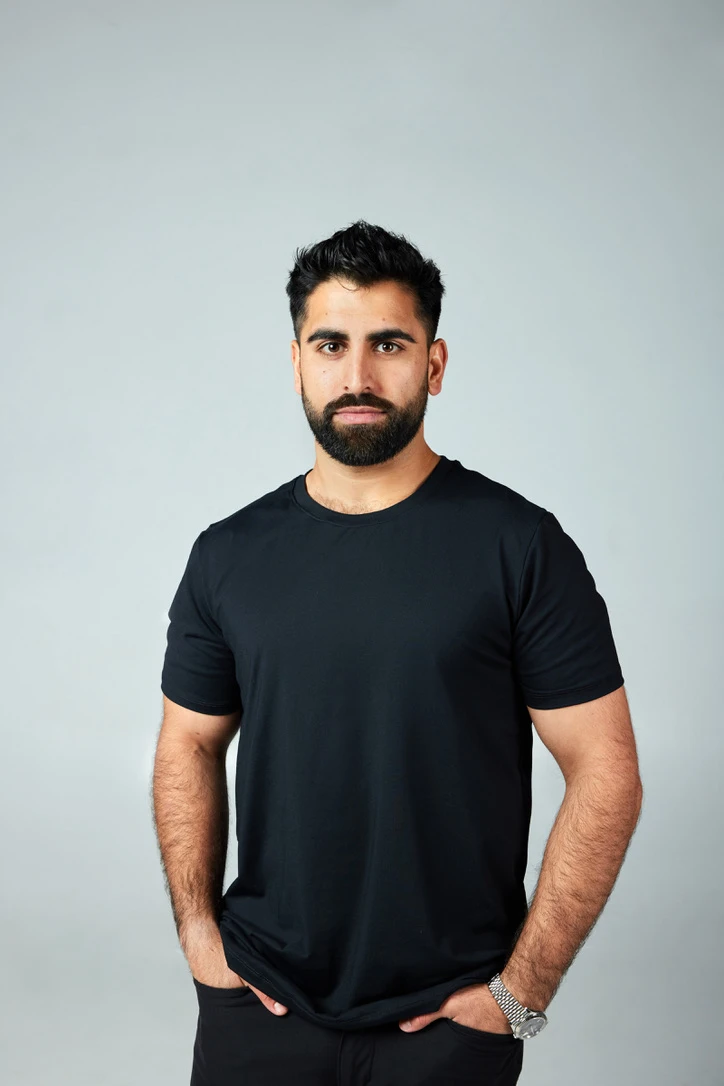
Happy Sunday! I hope you’ve had a great weekend so far! This weekend has been nothing short of exciting for me — Gov Ball NYC was incredible, I played tennis in Central Park, and got to see Carlos Alcaraz take the title of the French Open earlier today (yes, I teared up a little).
If you’re reading this email, I hope you’re rotting on a couch, with your feet up, AC on, and a beverage in your hand. Today as I write the email, I’m sipping on some Kolkata Chai I had delivered to the office.
This past week was NY Tech Week, and I had the pleasure of speaking at one of the events to kick the week off. Avni, the founder of GenShe, a community of 300,000+ around the globe, packed the Shopify NY space to talk all things content and personal branding. Thank you for having me there!
Coming up are a few fun events happening around NY but also within the world of commerce:
- CommerceNext is happening this week in NYC (June 11 to 13th) at the New York Hilton Midtown. Join and meet speakers from companies like Walgreens, Patagonia, J.Crew, and more! Apply for a free ticket or use code DTC for 10% off your ticket on their website!
- SubSummit is happening the week after in Dallas, TX where I’ll be speaking with the SVP of Marketing from Fab Fit Fun, along with the Director of Operations at Wellbel about all things subscription! Don’t miss that one — grab your last-minute ticket here or email me directly if you need a deal on a ticket!
- GROW NY is happening in NYC on July 9th — Join 1,000 growth people, 700 Shopify Plus brands, and 50 speakers (including me!) for an unforgettable day in Manhattan. Everything from retail, shipping, TV, CX/CS, holiday readiness and more is all in store for GROW. Grab your FREE ticket on their website here!
- Sharma Nights is happening in New York City — this is where we bring together the top eCommerce and retail executives for a party in NYC. I host it with my team and every single one is its own experience. This is happening June 28th — apply for entry here!
Sharma Brands is also hiring for a few different roles:
If you are this person, or know someone who is a good fit (skills-wise and is a killer) — please send it their way. Thank you in advance.
Okay, now let’s talk about today’s topic:
TikTok Shopping and Creator-Driven Commerce
I’ve been fascinated by TikTok shops, how brands are taking advantage of it, and how its shifting the user behavior of social commerce platforms. For today’s newsletter I picked my friend Huong’s brain about the world of TikTok Shop.
I met Huong a few weeks ago and it's very clear to me that she is one of the smartest people in the world of social commerce, specifically TikTok Shop. Huong is the head of marketing at CreatoRev which is an agency that helps both creators and brands maximize their efforts on TikTok Shop (“TTS” for this email). Since its launch, CreatoRev has worked with 1,000+ creators and has helped those creators earn more than $7M in commissions by selling $48M worth of GMV for brands via TTS.
For this week’s email, I wanted to get some of her insights and share some of my own on how both brands and creators should be thinking about TTS and how to leverage it in 2024. Ok, let’s dive in.
Some Stats To Set The Stage
As I was doing some research on the state of TikTok and TikTok Shop, I found some pretty interesting stats from Capital One. Here are some of the metrics that stood out the most to me:
First off, TikTok is enormous. They have 1.9BN users globally, and 150M users in the US as of last year. They also claim to have 5M US businesses on the app.
- TikTok shops are on track to do $17.5BN in GMV this year. Up nearly 10x from last year.
- Americans spend an estimated $7 million per day shopping on TikTok.
- Americans spent a total of 4.43 billion minutes per day watching TikTok videos in 2023. I did the math and that’s 8,422.69 YEARS of collective watch time per day. Pretty insane.
- Adult users spend an average of 54 minutes per day on TikTok which is 64% more time than the same cohort of Instagram users spend on Instagram.
- The Top 5 selling categories on TikTok Shop are beauty and skin care, supplements & vitamins, lip cosmetics, cologne & perfume, and body lotions & treatments.
- TikTok Shop is already the 14th largest health and beauty e-commerce retailer in the U.S.
- U.S. brands spent a total of $989.6 million on TikTok influencer marketing in 2023. In 2024 that spend is expected to reach $1.25 billion which would be up 26.7% from 2023.
- TikTok influencer marketing spending is expected to grow 82% faster than total influencer spending in 2024.
- Affiliate links on TikTok Shop have a 5.2% engagement rate, a 160% higher rate than on Instagram.
- Over 100,000 creators use the TTS affiliate program.
- And over 1,000 major brands have TikTok Business Accounts.
So… TikTok is booming and TikTok Shop is probably the fastest-growing player in the space.
Meta has not disclosed how big or successful Meta shops is (although I’m sure it’s massive) and YouTube just announced their partnership with Shopify to enable shoppable links on YouTube videos a few weeks ago.
In general, I feel pretty strongly that as time goes on, more and more commerce is going to happen natively on these social platforms. They have all of the users and attention so why not own the entire commerce stack and storefront too?
This is why organic social and taking content and creators seriously matters so much. Here’s some more info
on TikTok Shops below.
The 3 ways to sell on TikTok Shop
For those that don’t know:
There are only three ways to sell on TTS: live shopping, shoppable videos, and product showcases.
- Live shopping allows creators to pin a product on the screen during a livestream that customers can tap to shop for the item.
- Shoppable videos allow creators to include a product link in an in-feed video for customers to one-click tap & shop.
- Product showcases enables brands to set up a shop within the TikTok app for customers to purchase directly through the business’s profile.
All of these models allow creators/brands to promote various products through shops.
As far as fees, TTS charges a referral fee (i.e. “take rate”) for transactions on its platform. It used to be 2% plus $0.30 per transaction. However, starting from April 1, 2024, the fee has increased by a lot. From April 1 to July 1, 2024, the fee is 6%, and starting July 1, 2024, the referral fee will be 8% for all transactions made on the platform.
In short, TikTok has followed the classic growth playbook. They got a ton of brands and affiliates to start selling with TTS by offering low fees and now they’re raising prices. 8% is pretty steep but I guess that’s just the cost of doing DTC business in 2024.
As a creator: How do I become an affiliate?
As a creator, the steps to becoming an affiliate are pretty simple. All you need to do is:
Create a TikTok Account, get over 1K followers, and then apply for the TikTok Shop Affiliate Program.
Note: You can apply directly through the TikTok app or via the TikTok Creator Marketplace.
One thing Huong mentioned is that the criteria for being an affiliate just changed. Previously, you needed 5000 followers to qualify. Now you only need 1000. This is going to dramatically increase the number of affiliate creators (There are already 100K+) on the platform and increase the competition.
Once you do get approved, you gain access to the TikTok Shop Affiliate Dashboard, where you can find products to promote, track your earnings, and manage your affiliate links.
After that, affiliates can basically browse through various products available on TikTok Shop and choose items they want to promote. You can also easily see popular and trending items across different categories.
Then, when a creator makes content that drives a purchase, they get an affiliate fee. The fee itself is determined by the merchant/brand and depends on the product, category, and AOV. According to Huong, this typically ranges from 15-20%.
One important note about affiliate fees. As a brand, you have to remember that you aren’t paying them upfront for their time. Affiliate commissions are entirely performance based, this is why Huong recommends upping your affiliate fees to be competitive in the 15-20% range. Obviously this still depends on your product and AOV and the net dollars you are giving per sale.
As your affiliates create content and sales, they can then track their performance through the affiliate dashboard, which provides insights into clicks, conversions, and earnings just like any other dashboard would.
As a brand, how do I use TikTok Shop? & How long does it take?
For brands/merchants, the process is pretty similar but it takes much longer.
After you create a business account, you need to register for TikTok Shop. You will need to provide your business details including your business name, address, tax identification number, and other relevant documentation, etc.
Depending on what you sell, this could be more or less complex.
Huong mentioned that anything ingestible (like a supplement or powder) may take longer to be approved. TikTok may want to see your ingredients lists, FDA approvals, or any other certifications that support your marketing claims, etc.
What surprised me is that Huong mentioned this process can take 1-3 months to complete for some brands.
With the influx of new sellers trying to join TTS, TikTok is being more strict on what it allows. If you are planning to set up a TikTok Shop (with or without the help of an agency partner) make sure that you budget for this to take at least a month, if not more.
After you get approved you will need to upload your products that you want to sell. You have to add products to your shop with detailed descriptions, high-quality images, and pricing etc. Again, ensure your listings comply with TikTok’s guidelines. TikTok also has restricted categories like financial products, drugs, weapons, anything related to gambling, unlicensed herbal products, certain medicinal supplements, and specific medical devices etc. This is the same as all other platforms but just something to know.
As a brand, how do I opt into the TTS affiliate program?
Within the TikTok Shop Seller Center, as a brand you can then navigate to the affiliate program section and click join.
Next you have to decide which products you want to be eligible for affiliate promotion and then you have to set commission rates.
As I mentioned above, a fair commission rate is anywhere from 10-30% depending on what you sell.
If you are new and want to offer higher commissions to incentivize creators/affiliates, you can do that. If you are an established brand and think 5-10% commission is right, you can do that as well.
My advice is to set it, test it, measure it, and optimize it as you go.
Next, you need to promote your affiliate program by reaching out to creators. Inside of TTS, you can invite creators to be affiliates in one click. You can also see their past performance and certain metrics on how much they have sold, what categories they have sold in, etc before inviting them to be an affiliate for your brand.
Because there are so many brands vying for affiliate attention, creators are getting requests constantly.
Huong said that it’s not uncommon to request 50-100 creators to be an affiliate for you and only get 5-10 that respond. Just like anything, it’s a bit of a numbers game and trial and error before you find the right fit.
If they accept, you send out your product, they use it for their content and send it back to you or they get to keep the product for free depending on the terms.
You can also provide promo materials such as relevant images, videos, and product descriptions, to help them create compelling content, etc.
From there you can use the TikTok Shop dashboard to track the performance of your affiliate program. You can analyze sales data and traffic generated by affiliates and then try to double down on the top performers.
Which Categories Work Best on TTS? Which Don’t?
According to Huong, beauty and cosmetics are still #1. Massive brands like Tarte have been crushing it with their affiliate programs on TTS.
Huong has found that the sweet spot for products is typically around $10-15 range and up to $35.
This caters to the younger shoppers and the demo that’s buying from TTS. That said, Huong has seen products with $85 AOVs (like vacuums) do really well too.
In general, high AOV and luxury aren’t selling that well on TTS yet but that may change as the platform continues to grow and evolve. As I mentioned above, the top categories are beauty, fashion, and cosmetics.
Huong also mentioned home and garden, electronics, and accessories are other high-performing categories to consider.
Some of the categories that are having more trouble are the ingestibles and anything with medicinal claims. Weight loss, hair growth, and others are getting flagged right now for various efficacy concerns.
What Content is Working on TTS?
When it comes to content, Huong shared some great tips about the formats that are working right now.
#1 is responding to comments and using that as the catalyst for your next video. (P.S. if you need that comment graphic to lay on top of an ad, try using Tok Comment).
Inside of TikTok, there is a feature that allows you to respond to a viewer’s comment with a new video. TikTok will place that comment in the top of your video where the creator can then respond.
Imagine an affiliate is selling apparel. A viewer comments asking about how a particular dress or pair of jeans fits or wears for their specific body type (i.e height, weight, etc)
The affiliate can then use that comment to make a video both answering, reviewing, and promoting the product and while linking the TikTok shop.
These videos have been some of the top performers that Huong and her team have seen.
#2 Dramatic transformation content. The next format that’s working is what Huong calls the dramatic transformation. This is typically a more extreme version of before and after content.
Think about an affiliate advertising a makeup product and starting with “I could never find the right foundation to cover my acne until I found this!” where they present the problem and product as the perfect solution all within a few seconds. They also visually showcase their dramatic transformation which tends to convert well. The goal here is to keep your videos and hooks short. The attention span on TikTok is shorter than other platforms so you have to present the problem/solution in the first 1-2 sentences. It’s all about that hook!
#3 is livestream shopping.
As everyone knows, live stream shopping is a massive trend in other markets outside of the US.
For context, the live streaming e-commerce market in China reached $695 billion in 2023 and is expected to grow to be above 1 Trillion annually by 2026.
TikTok really wants to make livestream shopping work in the US and it’s still very underpriced.
One thing to note about live streaming is the attribution window. You might not see as many direct sales when you are actually live but you will see a ton in the 48-hour window after.
People love to tune in live for education and entertainment, go through the consideration period, learn, potentially do their own research, and then convert 24-48 hours after.
Here are some other tips from Huong:
Two Tips for Creators
1. Consider making a separate selling account.
There are many influencers who have large social media following in a particular niche. That could be lifestyle, fashion and beauty, food, business, etc. If you want to be an affiliate, consider making a shopping account where that’s the only content you produce and promote.
That is exactly what the top affiliate in CreatoRev’s network did who is now consistently earning $100-200K/month in commission sales.
She had a large following of over 100K followers, made a shopping account, converted 30-40K of her existing followers to her new channel, and then used her shopping channel for all of her affiliate content. It’s a great strategy for creators who don’t want to dilute their existing feed.
2. Don’t simply choose to affiliate for the top trending product:
When you get accepted into the affiliate program, you will see a full list of the top selling products on TikTok shop. Many creators simply try to affiliate for the top products thinking they will drive the most sales.
The smarter strategy is to find a smaller product with good commissions that’s personally relevant to you. There will be less competition and there’s a higher likelihood that your content will be the content that actually drives a sale.
Four Tips for Brands
Start creating content and investing in creators earlier than you think. The future of commerce is social shopping.
So many sales will happen on TikTok Shop, Meta Shops, and YouTube shops over the next 5+ years. The time
to start is now.
1. Expand your revenue channels:
When I wrote my 10-page email on how to succeed on Amazon, I talked about how many DTC brands find new audiences on Amazon as a channel. At first, they think it will disrupt and displace their DTC sales but instead, it actually adds a full new revenue stream to their business.
TikTok shop is typically the same way. Huong noted that TTS sellers typically don’t see a falloff in Shopify or Amazon sales by opting into TTS. In general, they see a net increase overall since there is a different cohort of consumers shopping on TikTok vs other channels.
2. Don’t spam creators to be your affiliates
As a brand, when you want a creator to be an affiliate for you, don’t spam them. The most you should do is request them as affiliates inside TikTok shop. Send them a DM. And maybe, politely send them an email.
Don’t spam them on IG or contact their friends or DM them daily, etc.
Remember that life is long so if it’s not a fit now, they might come back in the future. Spamming only makes the affiliate want to work with you less.
3. Name brands and crushing it but so are lesser known products:
If you have any brand recognition at all in the world of DTC or CPG, you should be on TTS today. Large brands like Tarte are crushing it but so are many undiscovered niche brands in every single category. There is room for everyone to succeed.
4. Fortune 5000 brands are coming:
Nike, Victoria's Secret, lululemon, H&M, Foot Locker, etc. are all selling on TikTok shop today and more and more of the major players are coming soon. Your job as a reader of this newsletter is to be early to this trend. It’s time to get on TikTok hop and go capture some of that underpriced attention to make some sales!
Alright, that’s it for this week. If you’re interested in diving in more with Huong, add her on LinkedIn or contact CreatoRev about how to get started!
Okay, now onto some fun stuff:
Vendor of the Week:
Particl — A competitor intelligence platform used by Skims, Hexclad, and FashionNova to identify new revenue opportunities.
Have you ever wondered why when a “trend” starts, brands are quick to the scene with their own products? All your favorite retail brand are paying for competitor data to understands where there are timely market opportunities.
With Particl, you can easily answer questions like:
- How can I take up more market share?
- What products across the category are showing consistent growth?
- How do I compare to competitors in my category?
- What variants are trending in the market?
- Where are there branding or pricing opportunities amongst trending products?
Here’s the beauty of Particl — being a new partner to the newsletter, I asked Particl if we could just give everyone access, without the need for a demo, and some credits to play around with it on their own. They were game! So here’s how you do it:
- Visit Particl’s website
- Click Get “Started” on the top right of the website
- Enter your email and create a password
- Fill out the form and near the bottom, you’ll see a $200 credit, but plug in SHARMA20 to get another $200, for a total of $400 in credits.
- You’re welcome!
Get access to over 10,000+ brands who have their data on Particl. If for nothing else, it’s a very dope platform to surf around for 15 minutes… your mind will start ideating on its own. Sign up here!
PS — Big shoutout to Particl for being so generous with their offer and not requiring any demo!
That's all for this week
I hope today’s newsletter was as energizing for you, as it was for me. To me, just like one product sells at Target, Walmart, CVS, Walgreens, HEB, and others… TikTok Shop, YouTube Shop, Instagram Shop, etc are all becoming different stores people walk into, will have loyalty programs with, and will prefer to shop with. I think I’m going to turn today’s newsletter into a deck and share that with you once it’s ready.
Tonight is Sunday night, so I hope you get those 9 hours of sleep tonight and hit the week running. Speaking of running… I’ve been running. Part of being in your 20’s and running is that you have to tell everyone that you’re running, so here I am, telling you.
Have an amazing upcoming week. I’ll see you next Sunday. Same time, same place!